

When a major route like Interstate 75 (I‑75) is forced to close because of fallen wiring, the effects ripple far beyond a simple traffic delay. The term “I‑75 Power Line Shutdown” has recently gained attention as storms, high winds, or weather‑related events down power lines — sometimes even high‑voltage transmission cables — across the roadway. This article explores what leads to an I‑75 Power Line Shutdown, what happens when it occurs, and how drivers and communities can prepare and respond.
- What Triggers an I‑75 Power Line Shutdown?
- Recent Examples: I‑75 Power Line Shutdown Incidents
- What Happens During the Shutdown: Immediate Consequences
- How Authorities Respond: Clearing, Repair, and Reopening
- Why Infrastructure Vulnerability Matters: Lessons from Shutdowns
- What Drivers and Communities Should Do to Prepare
- Why the Phenomenon Should Be Taken Seriously
- Conclusion
- Frequently Asked Questions (FAQs)
- About the Author
What Triggers an I‑75 Power Line Shutdown?
There are a few main triggers that have caused I‑75 shutdowns in recent years:
-
Severe weather and high winds: Strong wind gusts have repeatedly caused power poles alongside or across I‑75 to break or fall, dropping both transmission lines and distribution wires onto the roadway. In one incident, wind snapped multiple power poles just north of Monroe, causing downed power‑lines across both directions of I‑75.
-
Storms and lightning strikes: Thunderstorms with lightning have also been responsible — in some cases, lightning struck power‑line poles crossing I‑75, knocking down lines and instantly blocking traffic.
-
Falling trees or debris during storms: High winds or storms sometimes break tree limbs or entire trees that fall onto power lines. If those lines run over or near I‑75, the result can be a power line collapsing onto the interstate, triggering a shutdown. While this cause is common in many storm‑related outages, it has also been part of shutdowns on I‑75 corridors.
When such a line comes down across I‑75, authorities often take immediate action: lanes are closed in both directions for safety, and emergency crews are dispatched to remove wires, secure live electricity danger, and clear debris before reopening the highway.
Recent Examples: I‑75 Power Line Shutdown Incidents
Over the past couple of years, several incidents have illustrated how suddenly I‑75 Power Line Shutdowns can occur and how wide their impact can be:
-
In June 2025 near Vandalia, Ohio, a high‑voltage, three‑phase line fell across I‑75 between U.S. 40 and Northwoods Boulevard. All northbound and southbound lanes were closed. Crews from the local power utility were called in to remove the line and restore safety. The highway reopened around 10 p.m. after cleanup.
-
In April 2024, a powerful storm in Butler County caused six power poles to break just north of Monroe. Both transmission and distribution lines fell, blocking I‑75 in both directions for several hours. Traffic was at a standstill as crews worked through the night to clear the lines. The outage left hundreds of households without electricity.
These events highlight that an I‑75 Power Line Shutdown is not a rare, one‑off occurrence — but rather a recurring problem when infrastructure meets extreme weather.
What Happens During the Shutdown: Immediate Consequences
When a shutdown occurs, the consequences are immediate and multifaceted. Key impacts include:
-
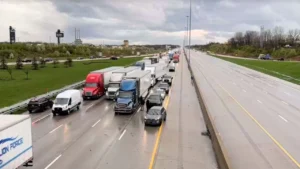
Traffic comes to a standstill: With both directions closed, thousands of vehicles — personal cars, trucks, freight haulers — pile up. Drivers are often stuck for hours, sometimes without clear communication about how long they’ll wait. In one case, vehicles idled so long some ran out of gas.
-
Safety hazards grow: Downed power lines are live electrical hazards. They risk electrocution, fires, or further damage — especially if they fall onto vehicles, buildings, or other structures near the highway. That’s why authorities always treat such situations as dangerous until confirmed safe. Widespread power outages: Because the power line damage often affects distribution networks, many nearby homes and businesses may lose power. For example, during the Monroe shutdown, hundreds of people lost electricity. Disruption to commutes, logistics, and emergency services: For commuters, commercial deliveries, and emergency responders, a shutdown can mean major delays or detours. Freight trucks may be stalled; people commuting home from work may find themselves stuck for hours — sometimes with little information.
How Authorities Respond: Clearing, Repair, and Reopening
Once a downed power line is reported on I‑75, the response typically follows a coordinated, multi‑step process:
-
Immediate road closure — Patrol units quickly block off I‑75 in affected segments to prevent vehicles from coming into contact with live wires. This is done in both directions if necessary.
-
Dispatch of utility crews — The power company responsible (for example a local utility provider) sends specialized crews to the scene to assess damage, cut power, remove fallen wires, and begin repairs. In reported cases, once crews arrive they “cut through” the cables to make them safe before physically removing them.
-
Inspection and clearance — After wires are removed, inspection teams check for road damage, ensure no hidden hazards remain, and only then allow traffic to resume. As seen in the June 2025 Vandalia case, this process took several hours, with reopening late in the evening.
-
Power restoration efforts — Utility companies also work to reroute power or repair damaged lines for affected customers nearby, though that may lag behind road reopening depending on damage severity.
This response highlights both the technical complexity and the urgency of handling an “I‑75 Power Line Shutdown.”
Why Infrastructure Vulnerability Matters: Lessons from Shutdowns
Each incident of I‑75 Power Line Shutdown reveals broader vulnerabilities:
-
Aging power infrastructure and exposed proximity to major roadways — Many power lines and poles near highways were built decades ago; storms, wind, and wear can make them vulnerable. When they fail, the consequences are major.
-
Weather volatility and climate concerns — Increasing frequency of severe storms, high‑wind events and unpredictable weather raises the chances of another shutdown. That means maintaining and upgrading infrastructure is more important than ever.
-
Need for proactive maintenance and vegetation management — Preventive trimming of nearby trees and regular inspections of power‑line poles near roadways can help reduce risk of collapse when storms hit.
-
Importance of quick coordination between utilities, law enforcement and emergency services — Rapid response reduces the time the highway remains closed and helps protect lives and property. Shutdowns show how critical this coordination is.
What Drivers and Communities Should Do to Prepare
Given how disruptive and dangerous an I‑75 Power Line Shutdown can be, here are some recommendations for drivers, commuters, and local communities:
-
When severe weather is forecast — storms, high winds — avoid unnecessary travel on long highway stretches like I‑75. If you must travel, check traffic alert services and local news before departure.
-
Always treat downed wires with extreme caution. If you see wires fallen across a road, do not approach; stay at least 30 feet away and call emergency services.
-
Keep alternative routes in mind. If I‑75 is closed, have backup roads/routes planned — especially if you travel frequently through known problem areas.
-
For frequent commuters or logistics operators: consider weather‑resilient scheduling, allowing extra time when storms are coming, especially during seasons prone to severe weather.
-
Support local policies and infrastructure upgrades: communities can advocate for stronger power‑line standards, regular inspections, and better emergency‑response coordination to prevent future shutdowns.
Why the Phenomenon Should Be Taken Seriously
An “I‑75 Power Line Shutdown” is more than an inconvenient traffic jam — it represents a breakdown at the intersection of infrastructure, weather, and public safety.
For individuals, it means unexpected delays, potential dangers, and disruption of plans. For communities, it can lead to longer‑term power outages, economic cost from delayed freight or commuter activity, and strain on emergency services. As weather patterns become more unpredictable, the risk of such shutdowns may grow — making awareness and preparedness essential.
Conclusion
The I‑75 Power Line Shutdown is a dramatic reminder of how fragile our road and electrical infrastructure can be when confronted with severe weather or aging systems. From high winds snapping poles to lightning strikes, the causes vary — but the result is always the same: traffic stopped in its tracks, danger posed to anyone nearby, and major inconvenience for communities. By understanding what causes these shutdowns, how authorities respond, and what drivers can do to stay safe, we can better prepare — and perhaps help prevent — the next time I‑75 goes dark.
Frequently Asked Questions (FAQs)
1. What exactly is meant by “I‑75 Power Line Shutdown”?
It refers to incidents when downed or damaged power lines fall across Interstate 75, forcing authorities to close the highway in both directions until hazards are cleared.
2. What usually causes these power‑line shutdowns on I‑75?
Most often strong winds, severe storms, or lightning strike cause poles and wires to break or collapse, sometimes combined with falling trees or debris.
3. How long do shutdowns on I‑75 typically last?
Shutdown duration varies — some incidents last a few hours; others may extend overnight, depending on damage severity and how quickly crews can clear and inspect the road.
4. Are there safety risks beyond traffic delays during a shutdown?
Yes — downed power lines pose electrocution and fire hazards, and can damage vehicles or nearby structures if not treated carefully.
5. What can drivers do if they approach a closed I‑75 due to a power‑line shutdown?
Avoid the area, follow detour instructions, do not attempt to cross or touch downed wires, and look for alternate routes until authorities declare the road safe again.
About the Author