
Why Does Ozdikenosis Kill You? Understanding the Risks, Myths, and Medical Reality
Introduction
Many people searching online ask a disturbing question: why does ozdikenosis kill you? The phrase appears alarming, mysterious, and medical in nature, yet it is surrounded by confusion and conflicting explanations. Some sources describe ozdikenosis as a deadly condition, while others suggest it may be misunderstood, exaggerated, or even misnamed. This article takes an informational, grounded approach to explain why does ozdikenosis kill you, what people usually mean by it, and how such claims emerge in health discussions.
Rather than sensationalizing fear, this guide focuses on clarity, human reasoning, and medical logic so readers can understand the topic without panic.
What Is Ozdikenosis?
To understand why does ozdikenosis kill you, it is important to first clarify what ozdikenosis actually is. At present, ozdikenosis is not recognized as a formally classified disease in standard medical literature. The term is most often associated with online discussions, misinterpretations of symptoms, or hypothetical conditions used to describe severe systemic failure in the body.
In many cases, ozdikenosis appears to be a label people apply to a combination of untreated physiological breakdowns rather than a single, diagnosable illness.
Why Does Ozdikenosis Kill You According to Online Claims?
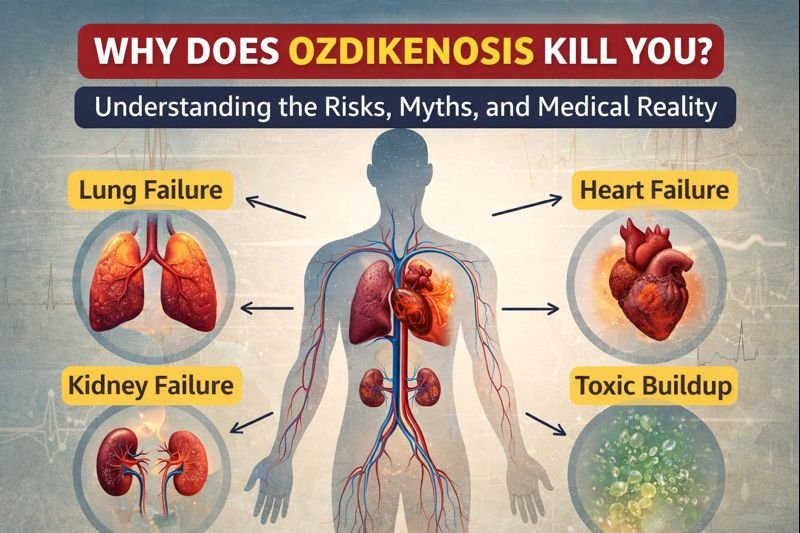
People asking why does ozdikenosis kill you usually encounter explanations that link it to sudden organ failure, oxygen deprivation, or toxic buildup in the bloodstream. These explanations often stem from fear-driven narratives rather than verified science.
The belief that ozdikenosis is fatal often comes from stories where symptoms are ignored until the body can no longer compensate. In such cases, it is not ozdikenosis itself that causes death, but delayed medical attention and cascading organ stress.
The Role of Systemic Failure in Fatal Outcomes
When people say why does ozdikenosis kill you, they are often unknowingly describing a process called systemic failure. This occurs when one malfunction in the body triggers another, leading to collapse across multiple systems.
For example:
-
Reduced oxygen delivery affects the brain and heart
-
Toxin accumulation damages the liver and kidneys
-
Inflammation spreads unchecked
If left untreated, these processes can become life-threatening. The fatal outcome is real, but the label ozdikenosis is often misplaced.
Misdiagnosis and the Danger of Delayed Treatment
Another reason people believe why does ozdikenosis kill you is because of misdiagnosis. When symptoms are vague or misunderstood, individuals may self-diagnose using unfamiliar terms rather than seeking professional help.
Delays in treatment are one of the most common reasons severe conditions turn deadly. Whether someone calls it ozdikenosis or something else, untreated medical issues are far more dangerous than the name attached to them.
Psychological Fear and Medical Misinformation
Online health discussions often amplify fear. When people repeatedly see searches like why does ozdikenosis kill you, the phrase itself starts to feel factual, even if the condition is poorly defined.
Fear-based information spreads faster than accurate explanations. Over time, repetition creates perceived legitimacy, making people believe ozdikenosis is a confirmed fatal diagnosis when it may not be.
What Symptoms Are Commonly Associated With Ozdikenosis?
People linking symptoms to why does ozdikenosis kill you often describe:
-
Extreme fatigue
-
Shortness of breath
-
Confusion or dizziness
-
Chest discomfort
-
Sudden weakness
These symptoms are serious, but they are not unique to one condition. They can indicate infections, cardiovascular problems, neurological disorders, or metabolic imbalances. The danger lies in ignoring these warning signs, not in the label ozdikenosis itself.
Why the Body Fails in Advanced Untreated Conditions
The human body is resilient, but only to a point. When multiple systems are under stress at the same time, survival becomes harder. This is the real explanation behind why does ozdikenosis kill you as people describe it.
Once vital organs begin failing together, medical intervention becomes more complex. Early diagnosis and care drastically improve outcomes, regardless of what the condition is called.
Is Ozdikenosis Always Fatal?
Despite alarming claims, the answer to why does ozdikenosis kill you is not that it always does. Fatality is not inevitable. In fact, when symptoms are addressed early and correctly diagnosed, outcomes are often manageable.
The belief that ozdikenosis always leads to death is largely driven by extreme cases, misinformation, and lack of context.
Medical Perspective on the Term Ozdikenosis
From a clinical standpoint, most healthcare professionals would not recognize ozdikenosis as a standalone diagnosis. Instead, they would focus on identifying the actual physiological cause behind the symptoms.
This approach saves lives. Treating real conditions rather than chasing undefined labels is the most effective way to prevent fatal outcomes.
Why Accurate Information Matters
Understanding why does ozdikenosis kill you requires separating fear from facts. When people rely on vague or unofficial terms, they risk misunderstanding serious health issues. Accurate information empowers individuals to seek help early and avoid preventable complications.
Conclusion
So, why does ozdikenosis kill you? In reality, it is not the term itself that is deadly. The danger comes from untreated symptoms, delayed medical care, misinformation, and systemic failure within the body. Ozdikenosis is best understood as a descriptive label people use when something has already gone seriously wrong.
The most important takeaway is simple: unexplained symptoms should always be evaluated by medical professionals. Clear understanding saves lives far more effectively than fear-driven terminology.
FAQs
1. Is ozdikenosis a real medical condition?
Ozdikenosis is not officially recognized in standard medical classifications and is often used informally.
2. Why do people believe ozdikenosis is fatal?
Because it is commonly associated with severe, untreated symptoms that can become life-threatening.
3. Can ozdikenosis be treated?
The underlying symptoms can often be treated once properly diagnosed.
4. Why does ozdikenosis kill you according to online sources?
Most explanations are based on misinformation or misunderstood medical processes.
5. What should someone do if they fear ozdikenosis?
They should seek professional medical evaluation rather than relying on unverified terms.
About the Author